Wild Cat Species
Pampas Cat
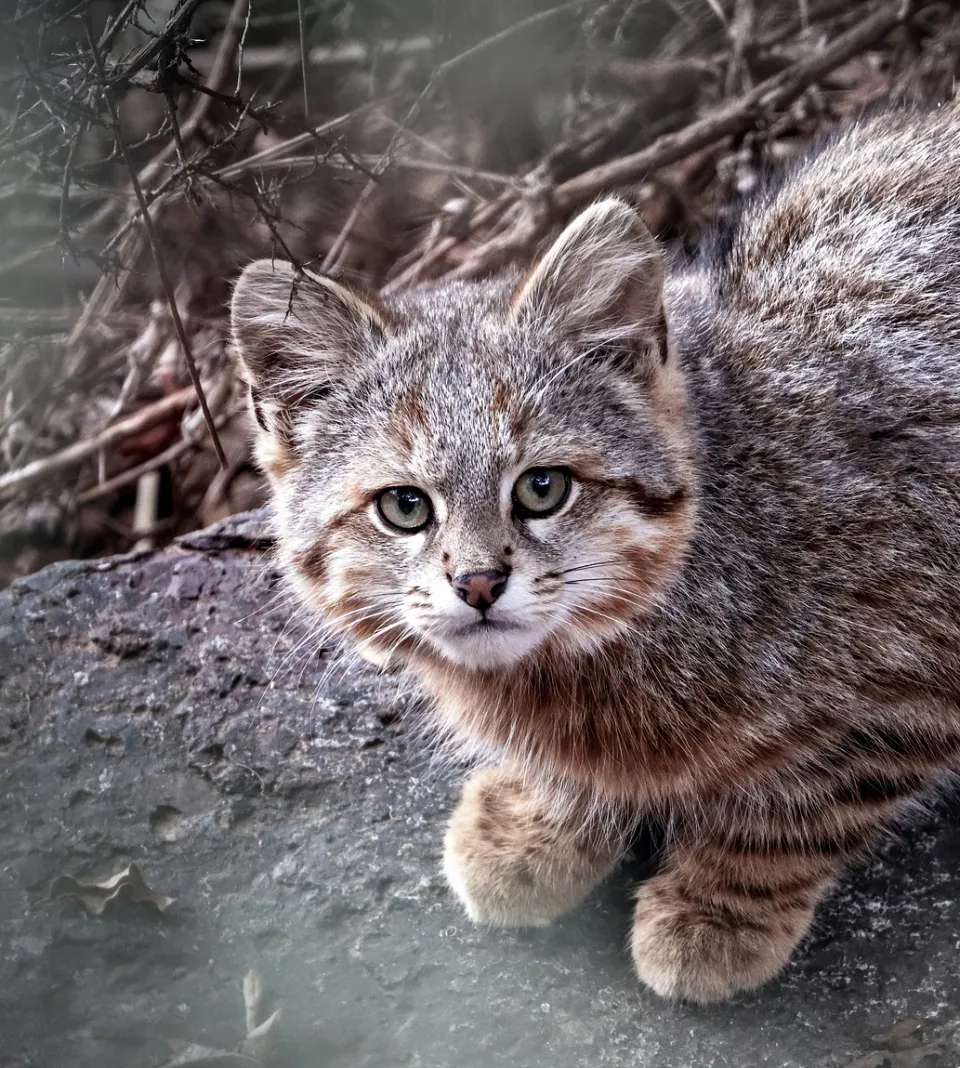
Although pampas cats may look like heavy-set housecats, it is an illusion: their long hair makes them appear larger than they really are.
Species Facts
- Publication Date: August 20, 2021
- Scientific Designation: Leopardus colocolo
- Endangered Status: Near Threatened (NT)
- Lifespan: Up to 16.5 years
- Body Length: 51-76 cm
- Height: 30-35 cm
- Tail Length: 30 cm
Profile
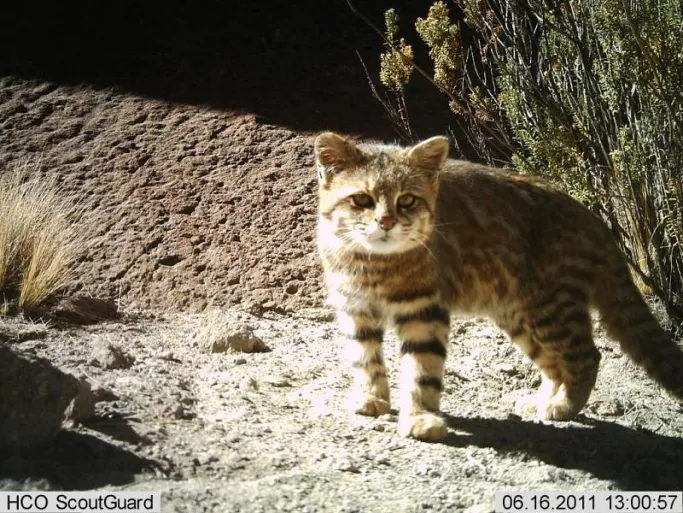
The pampas cat has a short tail, full and ringed with brown or black. The cat has a broad face that is sometimes marked with two conspicuous eye stripes. The color, pattern, and even the texture of this cat’s coat are not consistent. The background coat varies from yellowish white to grayish brown to silvery gray, with all intervening shades.
The cat is thought to be nocturnal and mainly terrestrial, but its habits are largely unknown. The wide range of habitats suggests that the pampas cat is a generalist, most likely eating any small vertebrate it can catch.
Species Distribution
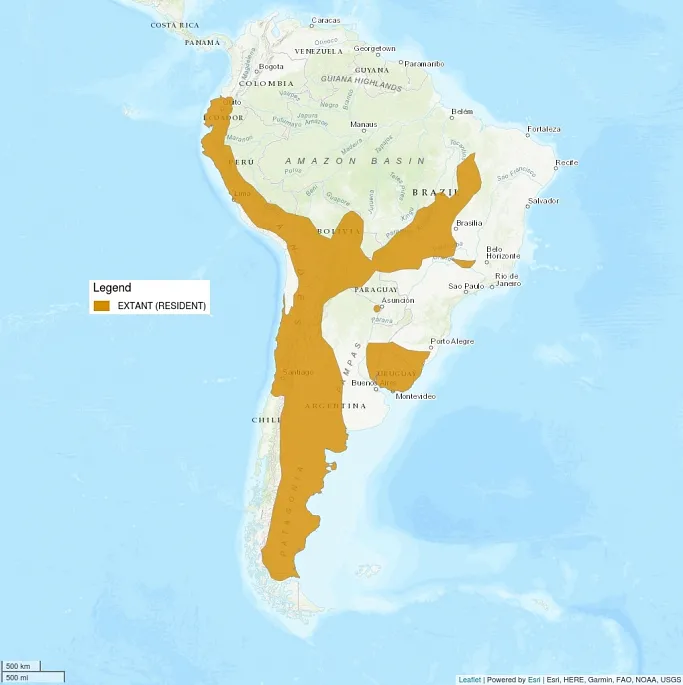
The pampas cat’s distribution in the mountainous areas of South America includes a great variety of habitats. While the cat typically is associated with the pampas (open grasslands), it also can be found in forest habitats, such as the Chilean cloud forests and the thorn forests of the Paraguayan Chaco.
Distribution map courtesy of IUCN (International Union for Conservation of Nature), compiled in 2008.
Threats to the Pampas Cat
Little is known of the pampas cat’s status in the wild. No population estimates are available. However, major threats include habitat destruction and sport hunting.
The pampas cat is classified as Near Threatened (NT) by the International Union for Conservation of Nature (IUCN) and protected under appendix II of the Convention on International Trade in Endangered Species (CITES).
Want to help us research and conserve this species?
Felidae Conservation Fund helps researchers around the world study and protect felids of all sizes.
Make sure you write a comment with "Pampas Cat" so we can designate 100% of your donation to go to protecting this species.
Support the work behind this page
Felidae is a 501(c)(3) nonprofit. Gifts fund field research, community science and habitat protection.