Wild Cat Species
Kodkod
In the Western Hemisphere, only the oncilla is as small as the tiny kodkod. The species, also known as the guiña, is the size of a miniature housecat and is similar in appearance to Geoffroy’s cat. The kodkod has a buff or gray-brown coat, heavily marked with small, round black spots which also cover its belly. The tail is short, bushy, and marked with a series of narrow black bands.
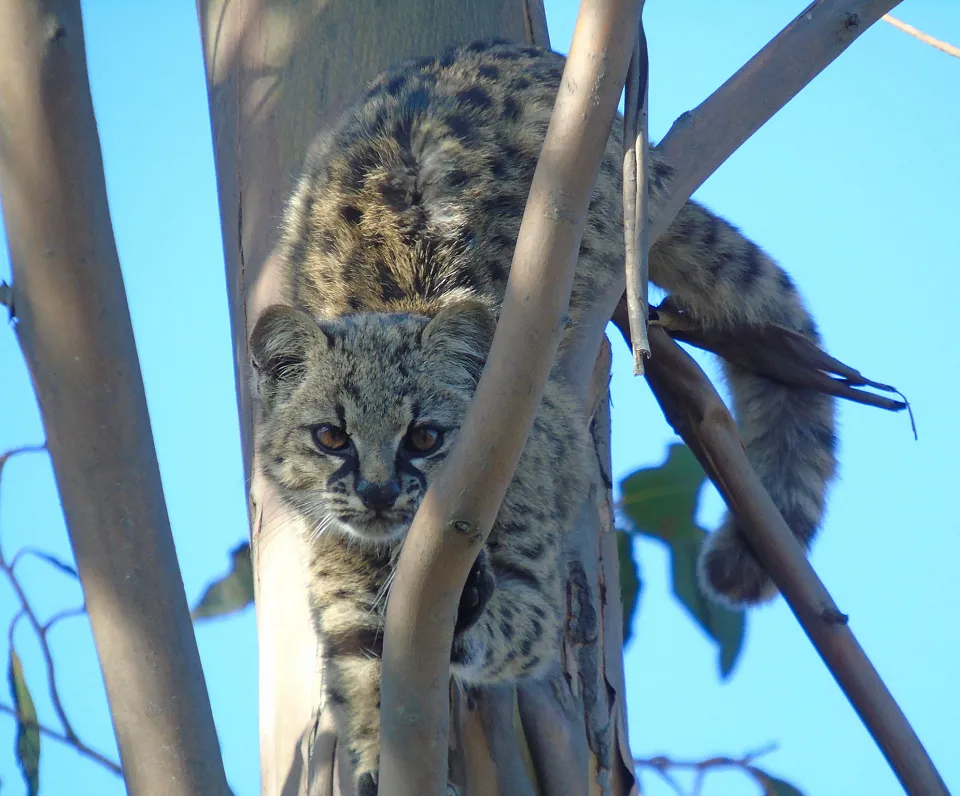
Species Facts
- Publication Date: August 20, 2021
- Scientific Designation: Leopardus guigna
- Endangered Status: Vulnerable (VU)
- Lifespan: Up to 11 years
- Weight: 2.1-3 kg
- Body Length: 39-51cm
- Height: 25 cm
- Tail Length: 19-25 cm
Behavior
The kodkod frequently inhabits deep-forested ravines with streams and near-vertical forested strips along the coast. Radio-collars showed that these cats were as likely to be active during the day as at night. Although they are excellent climbers, kodkods do not seem to hunt in trees. However, they do use branches on the steep sides of ravines while stalking prey. The kodkod is solitary and secretive. It is primarily a terrestrial hunter of birds, lizards, and rodents in ravines and forested areas.
Distribution
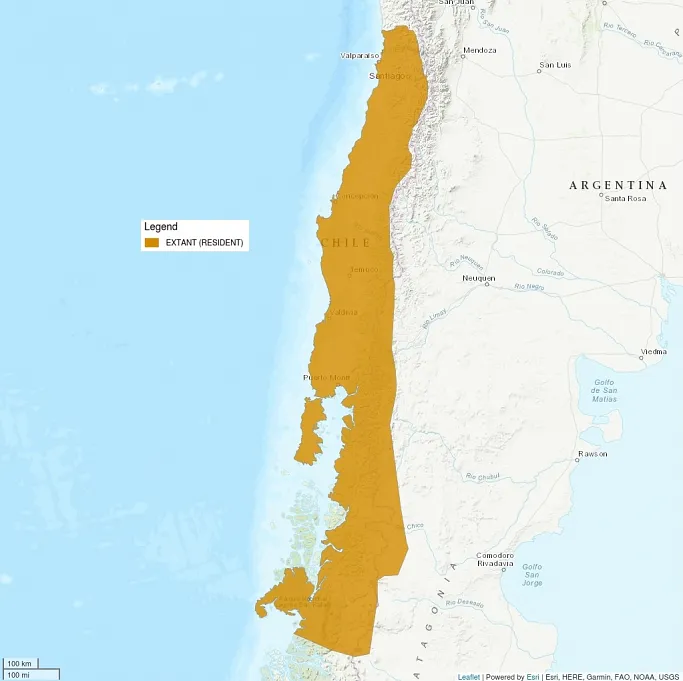
The kodkod’s distribution is limited to an area of Chile and Argentina roughly the size of Texas. Within this distribution, the cat is a forest dweller, inhabiting montane and coniferous forests at elevations below about 2,000 meters on both slopes of the southern Andes.
Distribution map courtesy of IUCN (International Union for Conservation of Nature), compiled in 2015 by Napolitano C, Galvez N, Bennett M, Acosta-Jamett G & Sanderson J.
Threats to the Kodkod
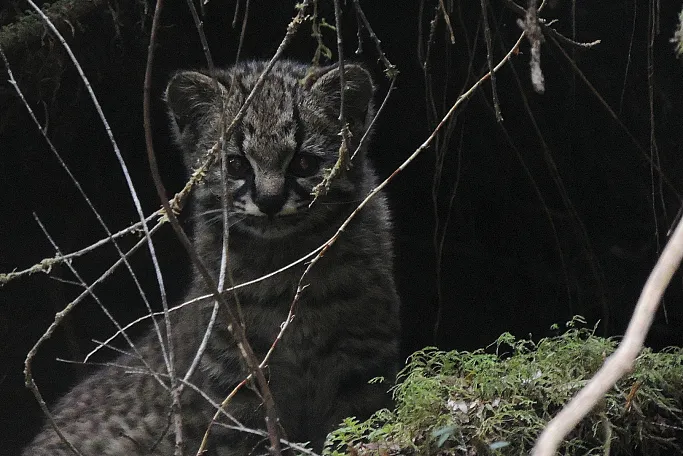
The kodkod is rare and endangered. It is threatened with habitat destruction and overhunting. The kodkod is currently classified as Vulnerable (VU) by the Convention on International Trade in Endangered Species (IUCN) and protected under appendix II of the Convention on International Trade in Endangered Species (CITES).
Want to help us research and conserve this species?
Felidae Conservation Fund helps researchers around the world study and protect felids of all sizes.
Make sure you write a comment with "Kodkod" so we can designate 100% of your donation to go to protecting this species.
Support the work behind this page
Felidae is a 501(c)(3) nonprofit. Gifts fund field research, community science and habitat protection.