Wild Cat Species
Geoffroy’s Cat
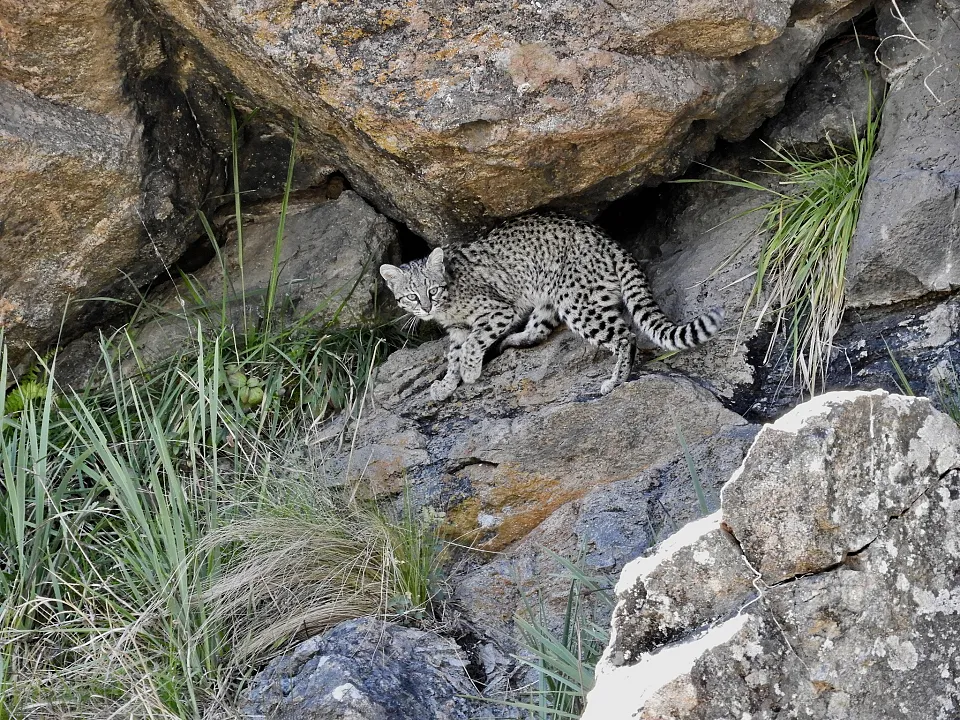
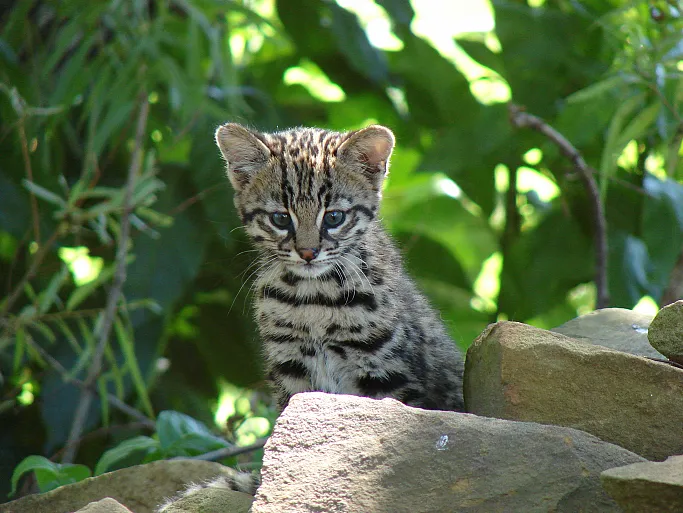
Geoffroy’s cat has a shorter tail and a more flattened head than a domestic cat, though it is about the same size. The background color of its fur ranges from smoky gray to tawny, with many intermediate shades. Its belly fur is white or cream-colored. The cat’s body also is covered with numerous small black spots, and the tail is ringed with dark bands.
Species Facts
- Publication Date: August 20, 2021
- Scientific Designation: Leopardus geoffroyi
- Endangered Status: Least Concern (LC)
- Lifespan: Up to ~ 14 years
- Weight: 2-6 kg
- Body Length: 45-75 cm
- Height: 15-25 cm
- Tail Length: 24-38 cm
Diet
Although the Geoffroy’s cat is an accomplished climber, it spends most of its time on the ground. This solitary, primarily nocturnal cat feeds on small rodents and birds.
Species Distribution
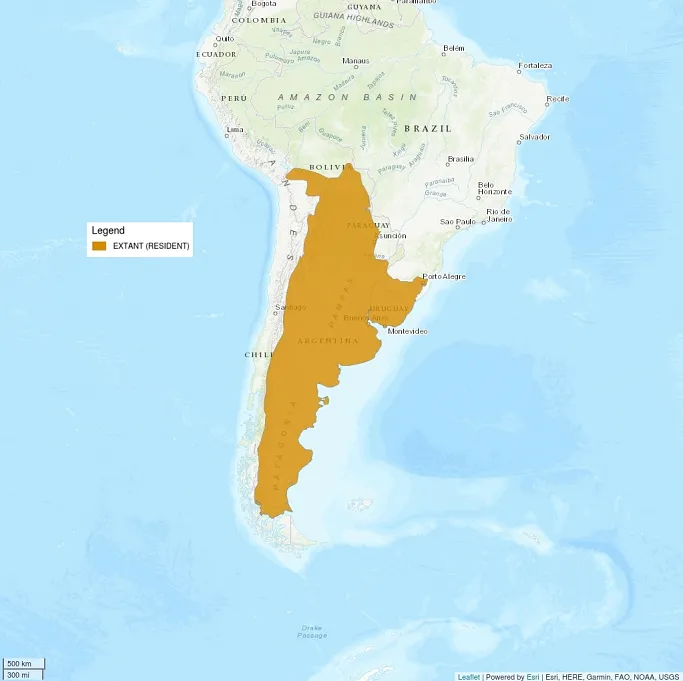
The Geoffroy’s cat is found in South America from sea level to elevations as high as 3,300 meters. This species inhabits a wide variety of temperate and subtropical habitats, including pampas and marsh-grassland mosaics.
Distribution map courtesy of IUCN (International Union for Conservation of Nature), compiled in 2015.
Threats to the Geoffroy's Cat
Despite being a generalist in habitat and diet, the Geoffroy’s cat is threatened by habitat loss and hunting (for its pelt). The Geoffroy’s cat is currently classified as Least Concern (LC) by the International Union for Conservation of Nature (IUCN) and protected under appendix I of the Convention on International Trade in Endangered Species (CITES).
Want to help us research and conserve this species?
Felidae Conservation Fund helps researchers around the world study and protect felids of all sizes.
Make sure you write a comment with "Geoffroy’s Cat" so we can designate 100% of your donation to go to protecting this species.
Support the work behind this page
Felidae is a 501(c)(3) nonprofit. Gifts fund field research, community science and habitat protection.