Wild Cat Species
Caracal
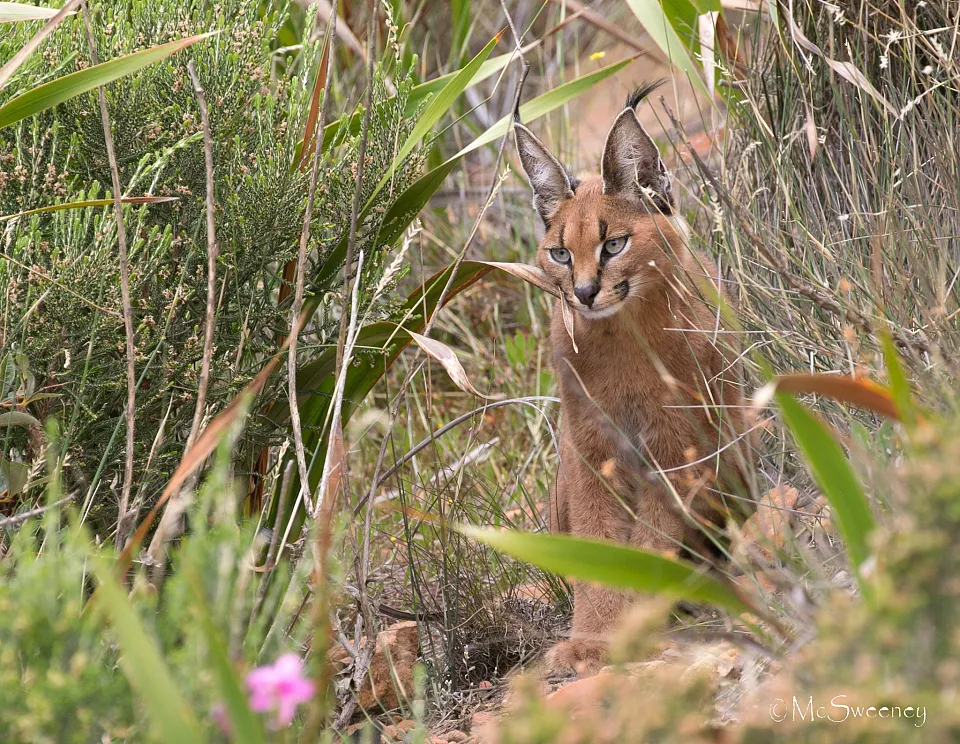
The caracal is distinguished by its ability to capture birds by leaping at least two meters into the air from a standstill. This medium-sized (8-20 kg) cat is slender and long-legged. Its powerful hind legs enable it to make spectacular jumps, to sprint short distances, and to climb well when necessary.
Species Facts
- Publication Date: August 20, 2021
- Scientific Designation: Caracal caracal
- Endangered Status: Least Concern (LC)
- Lifespan: Up to 19 years
- Weight: 8-14 kg
- Length: 62-82 cm
- Shoulder Height: 40-50cm
- Tail Length: 23-32 cm
Appearance
The cat has a broad, blunt face with a pair of tall, triangular ears. Each ear is topped with a long, tuft of black hair. Each of the caracal’s ears is controlled by approximately 20 muscles to help these hunters better determine where prey is hiding. The tufts of fur at the apex of the ears offer the added advantage of pointing to the prey. The robust skull is high and rounded and the jaw is short with large, powerful teeth. The caracal’s coat is a uniformly-colored tawny gray or reddish, frosted-sand.
Diet
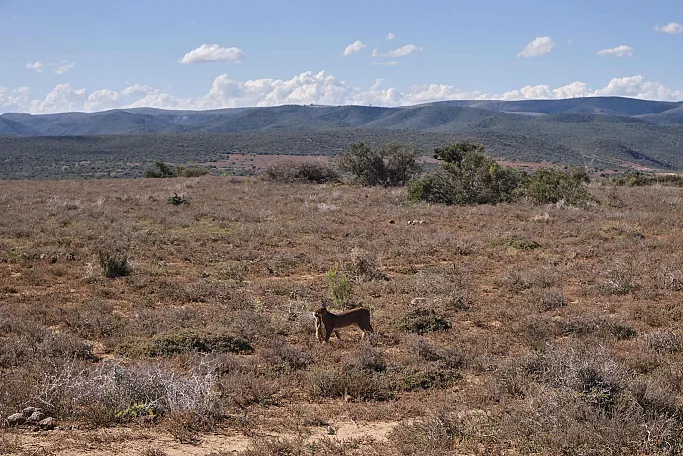
The cat hunts mainly at night, seizing birds of all sizes (including eagles and ostriches) and mammalian prey weighing less than 5 kg (hares, hyraxes, and small rodents). The caracal will not hesitate to take on larger prey if the opportunity arises. In fact, the caracal regularly kills prey two-to-three times its size (a behavior that is unusual among small-to-medium sized cats).
Species Distribution
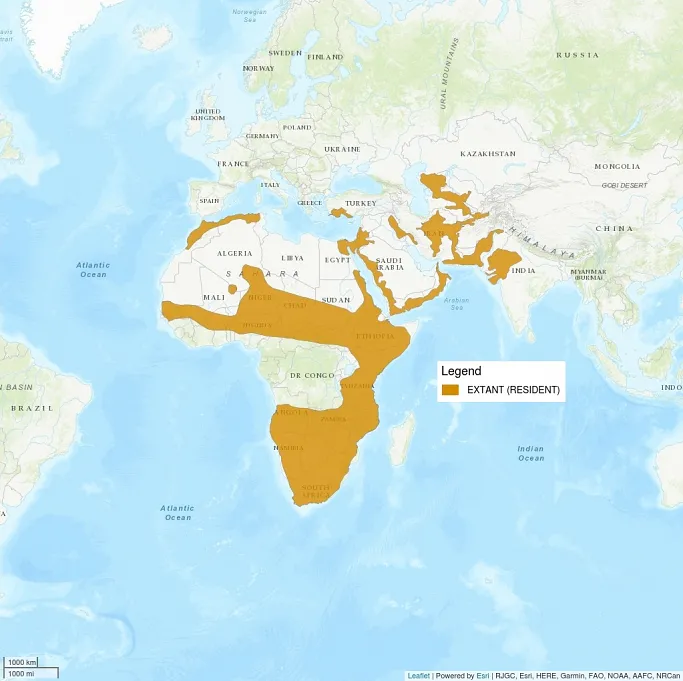
The caracal has a wide geographic range extending from North Africa and Turkey through the Arabian Peninsula and the Middle East. It also is found throughout Africa, except in the deserts of the Sahara and Namib and the dense forests of the Congo and West Africa. Unlike most cats, the caracal prefers open country and can tolerate dry conditions. However, the cat still requires some form of cover, such as trees, bushes, and rocks.
Distribution map courtesy of IUCN (International Union for Conservation of Nature), compiled in 2016.
Threats to the Caracal
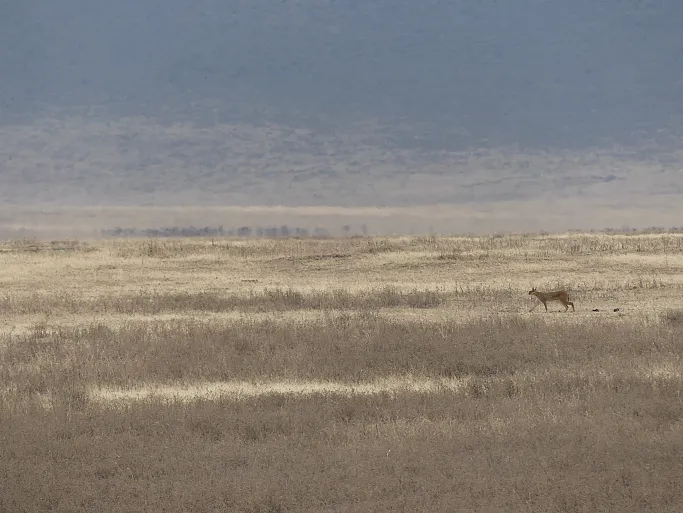
Threats to the caracal populations include habitat loss and hunting by humans. The species is in the position of being classified as endangered in the Asian portion of their range, yet hunted as a problem animal in southern Africa.
The species is categorized as Least Concern (LC) on the International Union for Conservation of Nature (IUCN) Red List. The species is protected by the Convention on International Trade in Endangered Species (CITES), under appendices I and II.
Want to help us research and conserve this species?
Felidae Conservation Fund helps researchers around the world study and protect felids of all sizes.
Make sure you write a comment with "Caracal" so we can designate 100% of your donation to go to protecting this species.
Support the work behind this page
Felidae is a 501(c)(3) nonprofit. Gifts fund field research, community science and habitat protection.