Wild Cat Species
Black-footed Cat
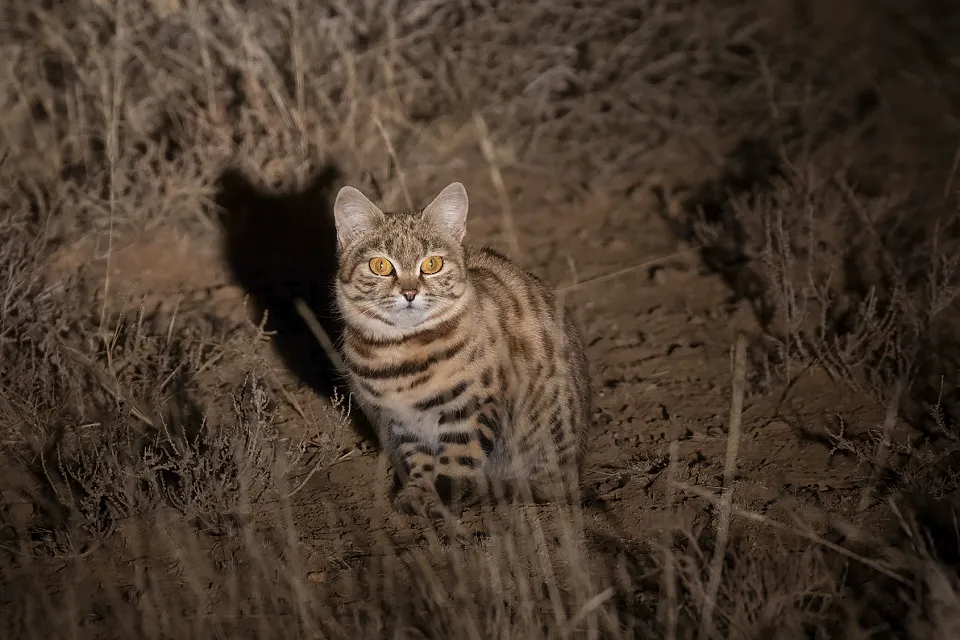
Weighing only about 2 kg, the black-footed cat is the smallest of the African felids. It has rounded ears, very large eyes, and a short, black-tipped tail. Coloring ranges from cinnamon-buff to yellowish-brown, patterned with conspicuous black or brown spots that merge to form bands or rings on the legs, neck, and tail.
Species Facts
- Publication Date: August 20, 2021
- Scientific Designation: Felis nigripes
- Endangered Status: Vulnerable (VU)
- Lifespan: 13 years
- Weight: 1.0-2.4 kg (2.2-5 lbs)
- Length: 50-63 cm (22-25”)
- Height: Approx. 20cm (8")
Diet
The black-footed cat is a terrestrial hunter preying on rodents (gerbils, mice, and shrews) as well as on small birds. Although this cat is not an adept climber, it is a diligent and skillful digger and is well adapted to its environment.
Species Distribution
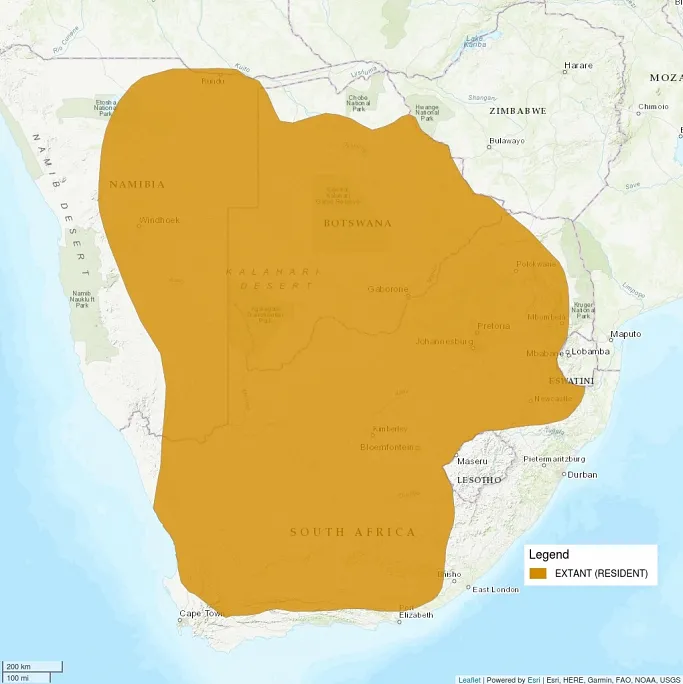
This wild cat is endemic to Africa (Botswana, Namibia, and South Africa).
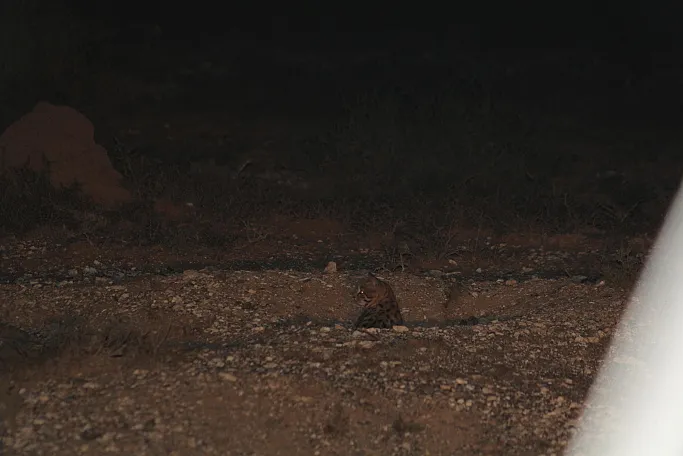
Living in dry, open habitats, with some degree of vegetative cover, the black-footed cat obtains its water requirements from its prey. Secretive and rarely seen, this cat is strictly nocturnal and spends the day resting in dense cover or in the unoccupied burrows of other animals.
Distribution map courtesy of IUCN (International Union for Conservation of Nature), compiled in 2016.
Threats to the Black-footed Cat
One of the cat’s main threats is its vulnerability to larger predators. The black-footed cat is not persecuted by humans as a threat to livestock, due to its small size. It is extremely elusive and difficult to trap.
It is classed as Vulnerable (VU) in the Red List of the International Union for Conservation of Nature (IUCN) and is listed in appendix II of the Convention on International Trade in Endangered Species (CITES).
Want to help us research and conserve this species?
Felidae Conservation Fund helps researchers around the world study and protect felids of all sizes.
Make sure you write a comment with "Black-footed Cat" so we can designate 100% of your donation to go to protecting this species.
Support the work behind this page
Felidae is a 501(c)(3) nonprofit. Gifts fund field research, community science and habitat protection.